§ the museum of time · nine rooms
every part of the clock was decided by somebody, for a reason that was not you.
The rooms run in order, oldest first. Each holds objects, the dates they carry, and the argument they were built to settle. Numbers in square brackets are references; all of them are gathered on one page so this one can be read straight through.
one tile = one roomnine rooms · eleven objects · seven diagrams
room 01
reading time off the sky
c.1500 bce – 1315 ce
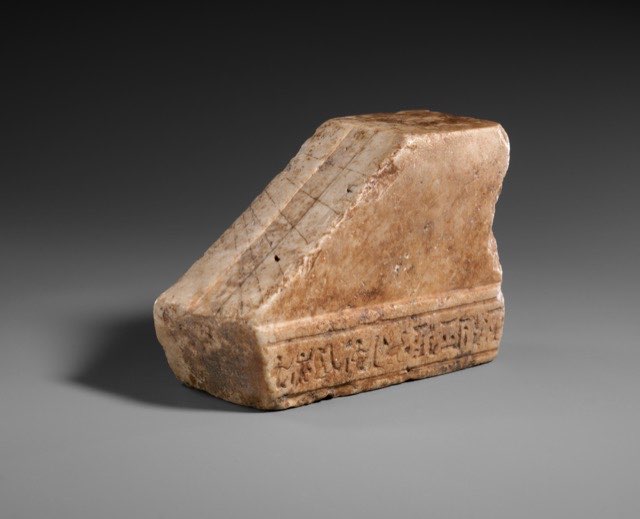
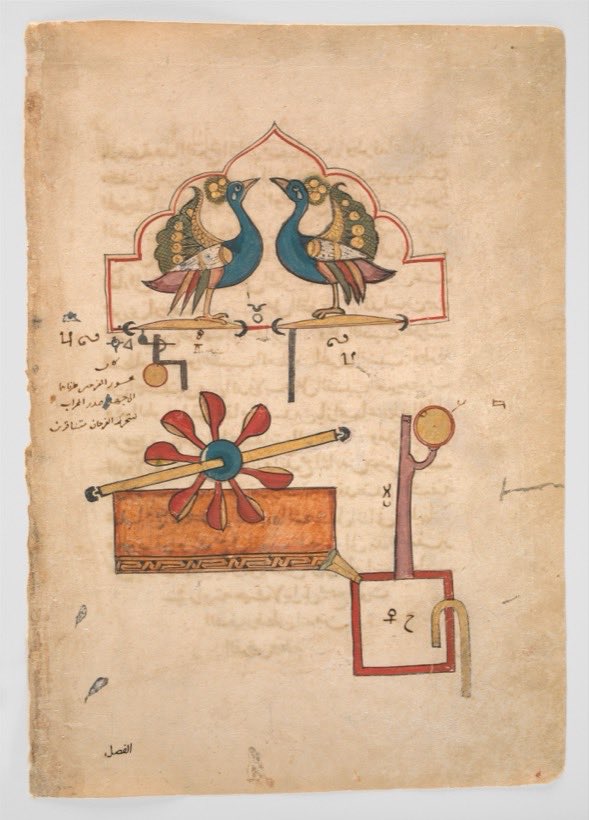
The oldest instruments read time off the sky. A shadow falling across a marked surface gives the position of the sun; a vessel draining at a known rate gives an interval when the sky is no help. Both were in use across Assyria, Babylon, Egypt, Greece and Rome, and both were built for local use rather than for agreement between places1.
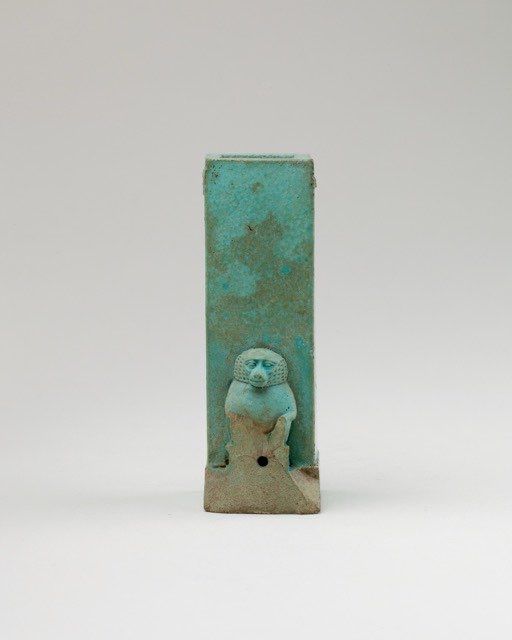
The count of twenty-four has a specific ancestor. Egyptian astronomers marked the passage of the night by the successive risings of a set of stars they grouped into decans, and the tables built on those risings divide the dark into a fixed number of named intervals2. A matching division of the daylight gives a day of twenty-four parts. The number came out of the star list. There is nothing about the Earth that produces it.
The hour that changed length with the season
For most of recorded history an hour was a twelfth of the daylight. Daylight is longer in June than in December, so the hour stretched and shrank with the year. A sundial cut for seasonal hours has curved hour lines for exactly this reason: the same instrument has to read a forty-minute hour in winter and an eighty-minute one in June3.
People who lived under that system were not confused by it. An hour meant a twelfth of the working light, which is a useful thing to know when the work is outdoors. The equal hour is the newcomer.
sources for this room · 01 Bonnin 2022 · 02 Neugebauer 1955 · 03 Mills 1996 · 04 Turner 2022
room 02
the machine that could not bend
c.1300 – 1574
A weight-driven clock has one hard problem: the weight wants to fall all at once. An escapement lets it fall a tooth at a time, and the thing that sets the rate is an oscillator. In the earliest European mechanical clocks that oscillator was a verge and foliot — a horizontal bar with adjustable weights, swinging back and forth against a crown wheel.
The verge and foliot is a poor oscillator. It has no natural period of its own; its rate depends on the driving weight, on friction, and on where the weights sit along the bar. Treated as a dynamical system it is a driven relaxation oscillator, which is why these clocks drifted by many minutes a day6.
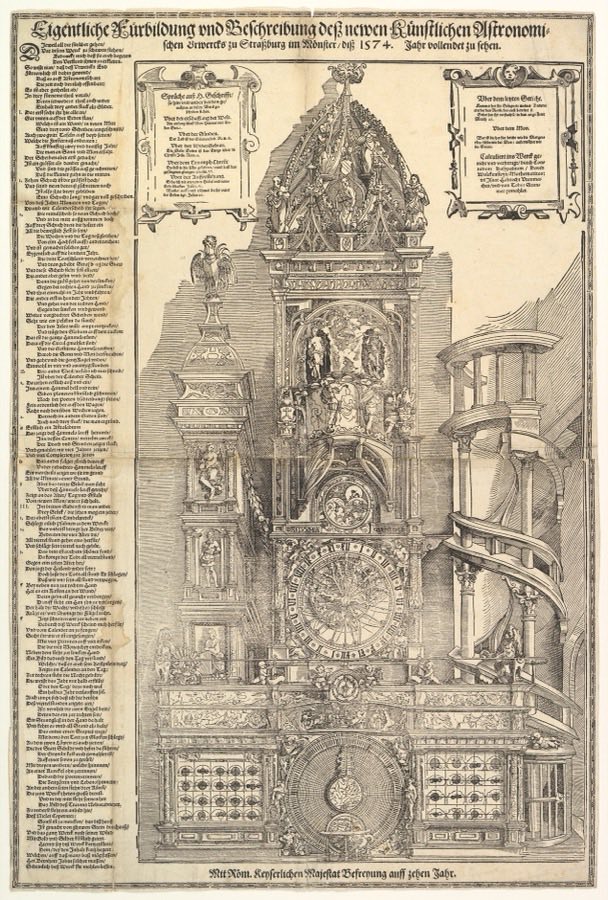
Its consequence was social rather than mechanical. A machine cannot easily make an hour that changes length through the year, so towns that installed one got equal hours whether or not they wanted them. Public clocks spread from the thirteenth century onward, and the equal hour spread with them523. This is the hinge of the whole museum. The unit that now describes a working day was chosen by a mechanism that could not produce any other kind.
sources for this room · 05 Addomine 2022 · 06 Denny 2010 · 07 Matthes 2022 · 23 Dohrn-van Rossum 1996
room 03
time as a triumph, time as a warning
1574 – 18th century
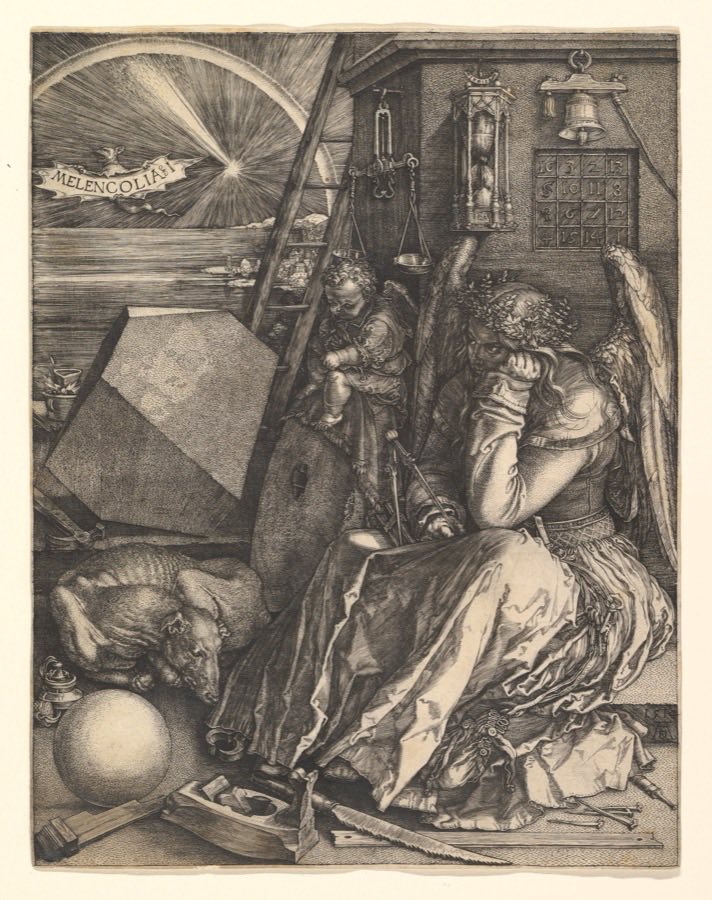
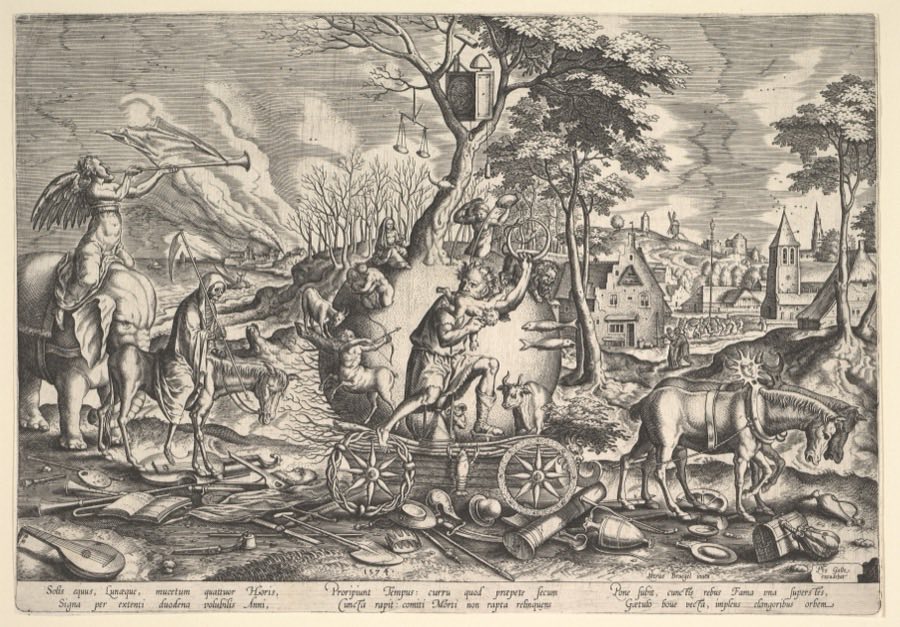
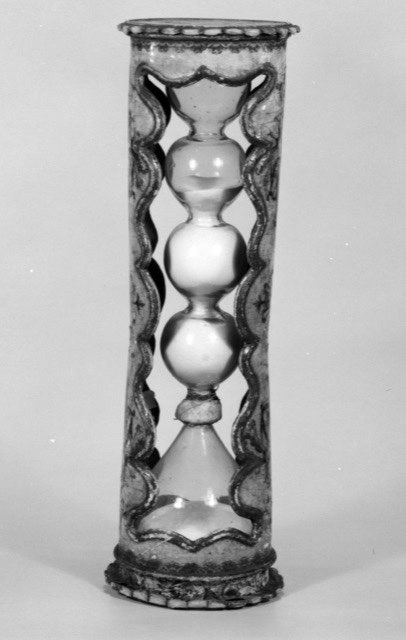
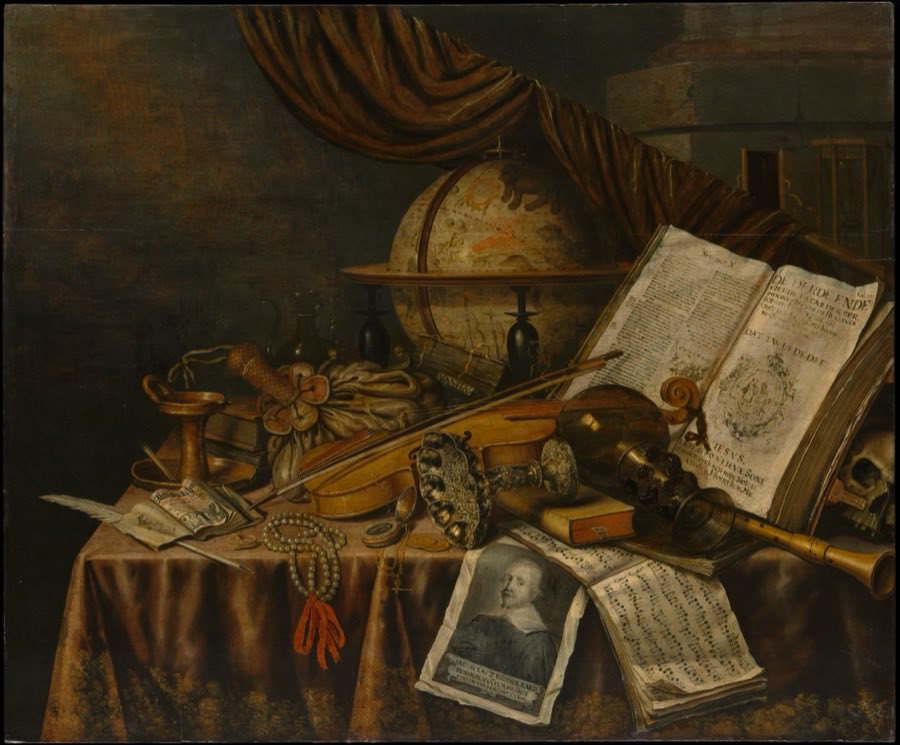
While the towns were installing clocks, printmakers and painters were using the same instruments for something else. In their hands an hourglass is not an administrative device. It is a statement about how much of a life is left, put in the picture so that the person looking at it does the arithmetic.
Two registers ran side by side for three hundred years. The clock on the tower said when to start work. The hourglass in the picture said that the work would end. Nothing on this site claims one register replaced the other; both are still running, and the second one is the reason a countdown feels different from a stopwatch.
sources for this room · the three object records linked above, read directly · attributions and dates as catalogued by the holding museum
room 04
the minute, and then the second
1656 – 2035
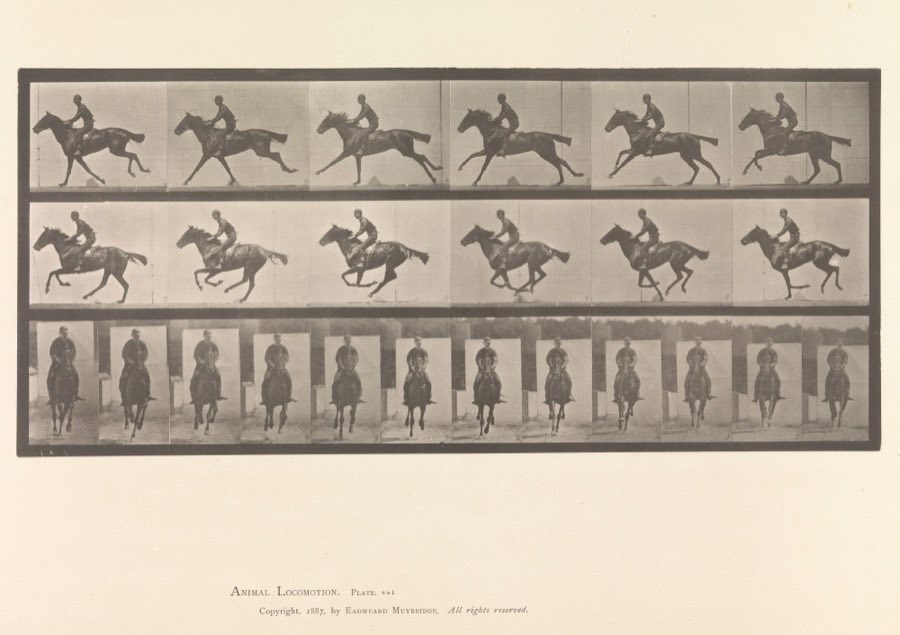
Dials showed hours for a long time before they showed minutes. A minute hand is only worth fitting if the clock can hold a minute, and the verge and foliot could not. The oscillator that could was the pendulum, applied to a clock by Christiaan Huygens in the 1650s. Huygens announced it in a pamphlet of 1657 that was then lost sight of for centuries, and again in the better-known Horologium of 1658; the general treatise, Horologium Oscillatorium, came fifteen years after that8.
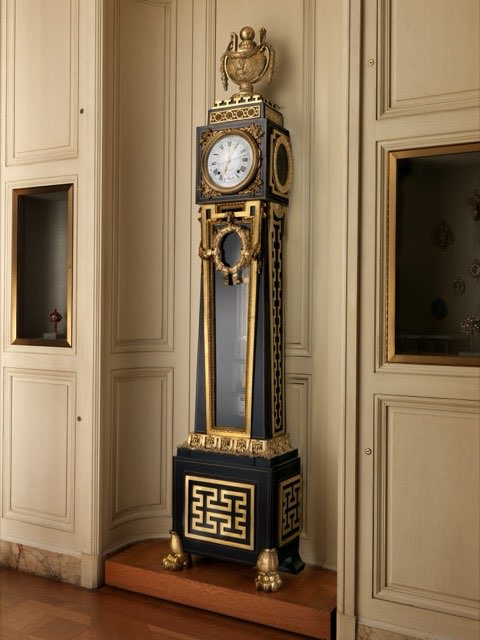
What follows in the domestic clock record is a change of resolution: longcase clocks with seconds pendulums, minute hands as standard, and then the whole eighteenth-century programme of precision regulators and marine chronometers driven by the problem of longitude at sea79. The unit people schedule by is set by what the available instrument can hold. Hours, then minutes, then, once a wristwatch was ordinary, minutes on the person.
Railways, and the end of local noon
Until the railway, noon was a local fact. The sun crossed the meridian at a slightly different moment in each town, and each town's clock said so. A timetable cannot survive that. If a train leaves at ten and arrives at noon, the two clocks have to agree about what ten and noon are.
Standard time was invented to make timetables work, and it was pushed through by railway and telegraph interests rather than by governments or astronomers. Ian Bartky's account traces the American case in detail: the standard was a private arrangement between railroads before it was law1021. It worked. Trains meet, broadcasts start together, surgery is booked. The cost was that the local reading was abolished, and once a single count covered a continent there was nothing left to compare it against. Vanessa Ogle's history is a corrective to the tidy version: the grid went down slowly, unevenly, and against resistance24.
One meridian, agreed in a room in Washington
Twenty-five states cast votes at a conference in Washington in October 1884, called to fix a single meridian for longitude and a universal day. The meridian through the centre of the transit instrument at Greenwich was adopted as the initial meridian by twenty-two votes to one, with Brazil and France abstaining. A universal day was adopted separately: a mean solar day beginning for all the world at mean midnight at that meridian and counted from zero to twenty-four hours, carried by fifteen votes to two with seven abstentions1112.
The conference did not hand out time zones. It fixed a reference, and the resolution adopting the universal day says in its own text that it is not to interfere with the use of local or other standard time where that is desirable. Zones were built on top of the reference afterwards, country by country, over decades. A universal standard is a negotiated object, and the negotiation is in the minutes.
The second stops being a piece of a day
A second used to be defined by the Earth: one part in 86,400 of a mean solar day. The Earth turns unevenly, so in 1960 the definition moved to a fraction of the tropical year 1900 — the ephemeris second — which was stable but could only be realised by years of astronomical observation15.
Meanwhile Louis Essen and Jack Parry had built a caesium resonator at the National Physical Laboratory and reported it in 19551314. In 1967 the General Conference on Weights and Measures redefined the second as 9,192,631,770 periods of the radiation from a specified hyperfine transition of the caesium-133 atom16. Since then the second has had nothing to do with the sky.
Two consequences follow. First, civil time now has to be patched to keep it near the turning Earth: UTC, endorsed in 1975, does that with leap seconds17. Second, the patch is being retired — in 2022 the General Conference decided that the maximum permitted difference between UT1 and UTC will be increased in or before 2035, on the grounds that leap-second discontinuities threaten digital infrastructure18.
Physicists have built clocks better than the definition they realise. Caesium fountains reach a few parts in 101619; optical standards are a hundred times better again, which is why the definition of the second is under review20.
sources for this room · 07 Matthes 2022 · 08 Whitestone 2012 · 09 Betts 2022 · 10 Bartky 2000 · 11 Meridian Conference 1884 · 12 Nature 1884 · 13 Essen & Parry 1955 · 14 Bullard 1955 · 15 CGPM 1960 · 16 CGPM 1967 · 17 CGPM 1975 · 18 CGPM 2022 · 19 Wynands & Weyers 2005 · 20 Arias & Petit 2019 · 21 Bartky 1989 · 24 Ogle 2015
room 05
what physics kept
1687 – 2022
Relativity is the part of this subject most often stretched into something it does not say. Every claim in this room is written to survive a physicist reading it, and the flourishes are left out.
Newton: time as a container
Newton opens the Principia with a scholium separating two things people run together. Absolute time, in Newton's words, “flows equably without relation to anything external”. Relative time is what we measure: a day, an hour, a month, taken from motion and used as a stand-in for the real thing2526.
The distinction matters because Newton is claiming that the stand-in can be wrong. If the Earth's rotation is uneven, then the day is an imperfect measure of a duration that is itself perfectly regular. Physics spent the next three centuries acting on that idea, and room 04 shows where it led: a second defined by caesium rather than by the sky.
What Newton assumed alongside it is the part that did not survive. In his account there is one universal present, the same for everybody, and two events either happen at the same time or they do not.
Einstein: time as a reading on a particular clock
The 1905 paper starts from two postulates: the laws of physics take the same form in every inertial frame, and light travels at the same speed in every inertial frame regardless of the motion of its source27. Everything below is a consequence of those two, and each consequence has been measured.
Proper time is the time a clock records along its own path through spacetime. It belongs to the path, not to the universe. Two clocks that start together, travel apart and meet again can show different elapsed times, and the difference is a fact about the two paths rather than a malfunction in either clock. This was measured directly in 1971. Four caesium clocks were flown around the world on commercial flights, eastward and then westward, and compared against clocks at the US Naval Observatory. The flying clocks lost 59 ± 10 nanoseconds going east and gained 273 ± 7 nanoseconds going west, in agreement with the prediction30.
The relativity of simultaneity. Whether two events at different places happen at the same time depends on the frame in which you ask. This is not a statement about signal delay or about not having found out yet. Two observers in relative motion, both correct, both with perfect instruments, disagree about which of two distant events came first — and for events far enough apart that no light could pass between them, there is no fact of the matter that settles it. Where light can pass between two events, everybody agrees on their order. Cause and effect are safe. What is frame-dependent is the ordering of events that are too far apart in space and too close in time for either to influence the other.
Gravitational time dilation. General relativity adds a second effect. A clock deeper in a gravitational potential runs slow compared with one higher up28. Pound and Rebka measured this in 1960 over 22.5 metres of a tower at Harvard29. By 2010 optical clocks could show it over a height difference of about one metre31, and by 2022 a single trapped sample of atoms one millimetre tall showed the shift across its own height32. The correction is not exotic. Satellite navigation would fail without it: the clocks in the constellation run at a different rate from clocks on the ground, and the system is built around that difference33.
Why the past looks different from the future
The equations of motion do not care which way time runs. Run a film of two colliding billiard balls backwards and it still obeys mechanics. Run a film of milk stirred into coffee backwards and it does not look like anything that happens.
The standard account of that asymmetry is statistical. There are very few arrangements of the milk that count as unmixed and an enormous number that count as mixed, so a system nudged around at random moves toward the many and stays there. That gives a direction without putting one into the laws. Statistics alone do not finish the job. The same reasoning applied backwards would say the past was also more mixed, which it was not. Filling the gap requires an extra assumption about the early universe having started in a very low-entropy state, and that assumption is where the live argument sits34.
Whether the future already exists
Presentism says only the present moment is real. The block universe says past, present and future are all equally real, and that the passage we experience is a feature of us rather than of spacetime. Hilary Putnam argued in 1967 that special relativity settles this in favour of the block: if there is no frame-independent present, there is no coherent way to say which slice of spacetime is the real one35. The argument is well known and it is not the end of the matter. Philosophers of physics have contested every step of it since, and the question remains open in the technical literature36.
This site takes no position on it. The disagreement is worth knowing about because it shows that even the physics of time is not finished, and because the popular phrase “time is an illusion” is a bad summary of any of the positions in the debate.
sources for this room · references 25–36, in full
room 06
the clock inside the body
1977 – 2022
Clock duration and felt duration are two different measurements. This room is where the argument on the front page gets its evidence.
The standard account of how animals and people time an interval: a pacemaker emits pulses, a switch lets them into an accumulator, and the count is compared against memory. It predicts that timing error scales with the interval, so the longer the wait, the less sure you are3738. No single organ does the work; the range of durations people handle is covered by different machinery at different scales39.
How long something felt depends on how much attention was pointed at time itself, on arousal, and on the state of the body while it passed. Knowing in advance that you will be asked how long something took changes the answer: prospective judgements run longer and vary less than remembered ones, across twenty experiments40. Drawing attention to a stimulus makes its duration feel longer41. Arousal and emotional valence push perceived duration in opposite directions, by changing both clock speed and attention to time42. One line of argument puts the encoding of duration in the state of the body itself43.
Timing in ADHD
In ADHD the gap between felt and measured duration is wider, and two meta-analyses pooling dozens of studies find it. One pools 55 studies of time discrimination, estimation, production and reproduction; differences are clearest for very brief durations, and the authors read the estimation and production results as consistent with a faster-running internal clock44. The other pools 27 studies, 1,620 participants with ADHD against 1,249 controls: timing is less accurate and less precise, with a tendency to overestimate intervals, and the effect holds across task type and stimulus modality45.
These are group differences on laboratory tasks. Neither paper is a diagnostic test, and neither went anywhere near a timer app.
The body's own drift
Some of the drift is physiological. Take away every clock and the body keeps its own uneven time. In subjects isolated from all time cues, produced intervals of five and ten seconds tracked body temperature, while produced hours tracked how long the person had been awake46. Short and long durations are not timed by the same machinery, and neither of them is timed by anything that would satisfy a metrologist.
sources for this room · references 37–46, in full
room 07
the hour as a local custom
1959 – 2019
Most people treat their own handling of time as the way time works. It is a local arrangement with a history, and other arrangements are running right now in other places. This room is careful about how strong each piece of that evidence is.
Edward T. Hall proposed a distinction that most people have never heard of and will recognise immediately. Monochronic time treats a schedule as a sequence: one thing at a time, in order, with the plan taking precedence over the people in the room. Polychronic time treats a schedule as a set of commitments held at once: several conversations running together, relationships taking precedence over the plan, and a start time understood as a region rather than a point47.
Neither is a deficiency of the other. Someone raised monochronic experiences a polychronic meeting as chaos; someone raised polychronic experiences a monochronic meeting as brusque and a little cold. Both are reading the same room correctly by their own rules.
Where the framework is weak
Hall's schemes are influential out of all proportion to the evidence behind them. Peter Cardon reviewed 224 articles in business and technical communication journals published between 1990 and 2006 and found that Hall's contexting model was the most cited theoretical framework in the field, that an extensive set of propositions had grown out of it, and that few of those propositions had been tested — with the most-tested ones failing to support the model48. His review targets high-context and low-context culture rather than monochronic and polychronic time, but it is the same author, the same method and the same literature.
The repair is to stop treating it as a property of nations. Allen Bluedorn and colleagues built the Inventory of Polychronic Values from eleven samples totalling 2,190 people, measuring polychronicity as a preference held by individuals and organisations rather than as a national trait49. Read that way the distinction is a variable you can measure in a team, which is more useful than a label you attach to a country.
What counts as late
Three studies do the unglamorous work of measuring this rather than asserting it.
Lawrence White and colleagues gave 301 university students in Estonia, Morocco and the United States a set of scenarios about scheduled appointments and asked when an arrival becomes inappropriately early and when it becomes inappropriately late. The definitions varied substantially across countries and across individuals, and they moved in a regular way with the features of the appointment: what the meeting is for, and the relative status of the people in it50.
Wendelien van Eerde and Sana Azar asked 245 respondents in South Africa, the Netherlands and Pakistan the same kind of question. The Pakistani respondents defined lateness to business meetings differently from the other two groups and accepted larger intervals of lateness for appointments. Status mattered too, and not everywhere the same way: Dutch respondents did not allow longer waiting times for higher-status people, while the South African and Pakistani respondents did51.
Robert Levine and Ara Norenzayan measured the pace of life in large cities in 31 countries three ways at once: average walking speed downtown, the speed with which a postal clerk completed a simple request, and the accuracy of public clocks. Pace ran fastest in Japan and western Europe and slowest in economically undeveloped countries, and it correlated with colder climates, economic productivity and individualism. Faster places also had higher rates of death from coronary heart disease, higher smoking rates — and greater subjective well-being52. Those last two findings sit together in the same paper. They are correlations across countries, and they carry every caveat that attaches to a cross-national correlation.
Being on time was taught
E. P. Thompson's 1967 essay is the standard account of how clock-oriented work replaced task-oriented work in industrialising England, and of how the habit of watching the clock had to be instilled — through the factory bell, the fine, the school and the sermon22.
It is also contested, and honesty requires saying so. Paul Glennie and Nigel Thrift argued in 1996 that Thompson's account rests on a picture of a single modern time-sense diffusing outward from industrial work-discipline, and that the historical record shows multiple time-senses and multiple time-disciplines, with people handling them skilfully long before the factory53. Their paper is a rework rather than a refutation, and the debate has continued since.
Take from Thompson the part that survives the criticism: punctuality is a trained competence rather than an instinct, and somebody did the training for a reason. Do not take the version where a single date marks the arrival of clock time.
What language does to the direction of time
Almost every language describes time using space. English puts the future ahead and the past behind: a deadline approaches, a bad week is behind us. That mapping is close to universal, which makes the exceptions interesting.
Rafael Núñez and Eve Sweetser documented an Aymara construal in which the past is in front and the future behind — and they showed it in gesture as well as in vocabulary, which is what makes the finding hold up. Speakers gesture forward when talking about known past events and back over the shoulder for the unknown future54. What the finding does not claim: that Aymara speakers cannot think about the future, or perceive time backwards, or experience duration differently. Those versions circulate widely and none of them is in the paper.
Lera Boroditsky reported in 2001 that Mandarin speakers, whose language uses vertical spatial terms for time alongside horizontal ones, were faster to answer temporal questions after vertical primes than English speakers were55. Jenn-Yeu Chen failed to replicate it in 2007, in a paper whose subtitle says so plainly56. Boroditsky and colleagues returned in 2011 with new experiments and reported that Mandarin speakers were more likely to think about time vertically than English speakers were, using different tasks57; a companion paper the same year examined the pattern in three dimensions58. The honest summary is that a vertical bias in Mandarin speakers has been reported in several independent tasks, that the original 2001 finding did not replicate, and that the size and the mechanism of the effect are still argued about.
sources for this room · references 47–58, in full, with 22 Thompson 1967
room 08
works whose material is duration
1931 – 2014
Six pieces, chosen because each one makes duration the material rather than the container. Between them they run from an hour to forty-eight years. Every attribution points at a museum record or a publisher's own page.
wall label · no object
Salvador Dalí · The Persistence of Memory · 1931 · oil on canvas, 24.1 × 33 cm
The painting everybody asks for. A flat bay under a hard evening light, a headland on the right, a bare tree on a plinth. Three pocket watches have gone soft: one folds over the branch, one drapes off the edge of the plinth, one lies across a pale flopped face on the sand, its features closed. A fourth watch lies shut and orange, its case crawling with ants. The clocks keep their dials and their hands, and the numbers stay legible. They have lost only their rigidity.
It is in copyright — Dalí died in 1989 — and it belongs to the Museum of Modern Art in New York, so it is not reproduced here or anywhere else on this site. The museum's own record is worth going to for the picture and for the tombstone data72. What the painting is doing sits directly under this whole museum: the instruments are still there, still marked in the ordinary way, and they no longer hold their shape against the thing they were built to measure.
Steve Reich · Piano Phase · 1967
Two players hold the same short figure. One keeps tempo; the other speeds up by a fraction until it has moved one note ahead, then locks in again. The process repeats until the two are back in unison59.
Nothing is added. Every event you hear is already in the first bar, and the piece is the drift between two copies of it. Reich called this kind of writing a gradual process, and wanted the process audible rather than hidden60. The whole mechanism is on the surface, and hearing it takes as long as it takes.
William Basinski · The Disintegration Loops · released 2002
Basinski set out to digitise tape loops he had made twenty years earlier. The ferrite was shedding off the backing as the tape crossed the head, so each pass came back thinner than the last. He let it run and recorded the whole decay; dlp 1.1 lasts 1:03:3561.
The form was produced by the medium failing. The loop is unchanged; what changes is how much of it survives each revolution, until there is almost nothing left62. The suite is widely discussed in connection with the autumn it was finished in New York, and that reading has followed it since. The mechanism is physical, and would have happened to that tape in any year.
On Kawara · the Today series · 1966–2014
On 4 January 1966 Kawara painted the date on a monochrome canvas. He went on doing it until his death in 2014: nearly three thousand paintings over forty-eight years, made in more than a hundred and thirty places, each one hand-lettered in white on a plain ground under a strict set of rules and recording nothing but the day it was made6465.
The canvases are stored in boxes holding pages of a newspaper from the same day and the same place63. Individually they record almost nothing. Held together they are a record of forty-eight years of a person continuing to be alive, made of the one fact about a day that survives being written down66.
Tehching Hsieh · One Year Performance 1980–1981
Hsieh installed a mechanical time clock of the kind businesses use to monitor employees' hours, and punched a card in it every hour of the day for a year. A single frame of 16mm film was exposed at each punch, so the year plays back in a few minutes, with his hair lengthening through it. The work exists now as the time cards, the clock itself, the film, an announcement poster, photographs, and legal documents attesting that he kept to the conditions he had set6768.
The constraint is in the arithmetic. Marking every hour meant never travelling far from the studio and never sleeping more than an hour at a stretch, for a year. The instrument of industrial time-discipline was pointed at a life, with nothing in between. Room 07 is where that instrument came from.
Christian Marclay · The Clock · 2010
A twenty-four-hour montage assembled from thousands of film and television clips in which a clock or a watch is visible or the time is spoken. The montage is synchronised to the local time of wherever it is being shown, so the time on screen is always the actual time70. A character glances at a clock at 3:42 in the afternoon and it is 3:42 in the afternoon in the gallery. Cinema normally compresses and skips; this compresses nothing. Tate acquired the work jointly with the Centre Pompidou and the Israel Museum in 201269.
Felix Gonzalez-Torres · “Untitled” (Perfect Lovers) · 1991
Two identical battery clocks hang side by side, set to the same time. They will drift apart. One will stop. When that happens they can both be reset, and perfect synchrony resumes71.
The work was made shortly after the artist's partner was diagnosed with AIDS. Gonzalez-Torres described wanting to face his fear of time by putting two clocks in front of himself and letting them tick. Two instruments built to agree, agreeing for a while, and then not: that is the shortest form of the argument in room 04.
sources for this room · references 59–74, in full
room 09
the closing room
1764
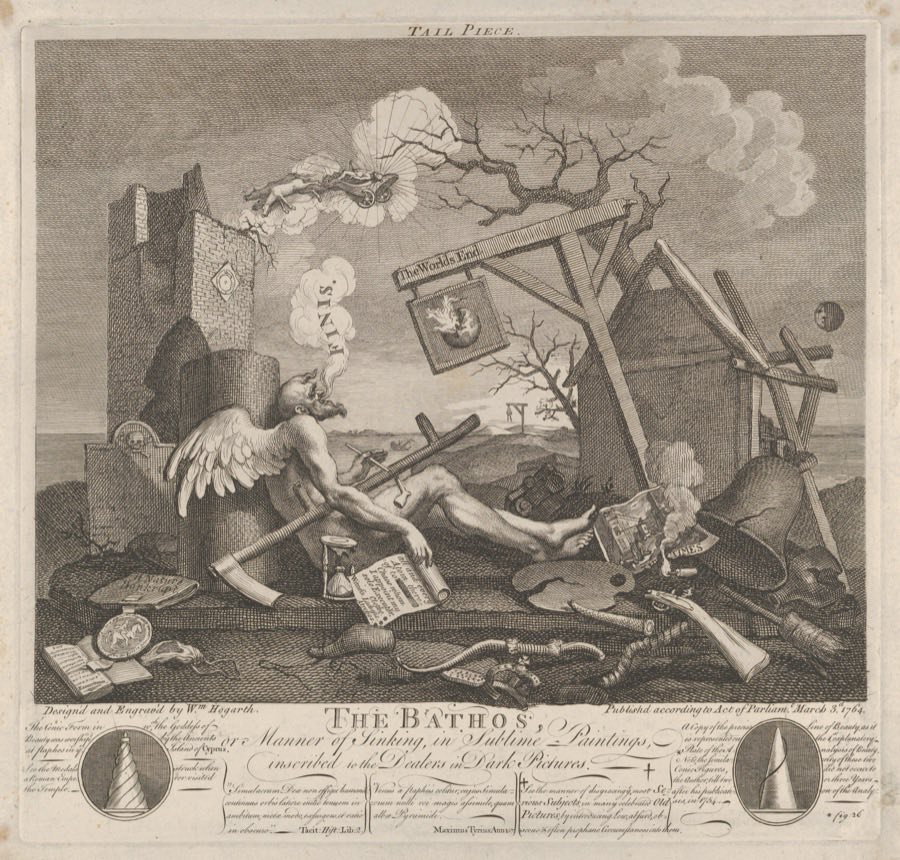
Nine rooms, and one line running through them. Every unit in the count was fixed by somebody solving a problem: a star list, a machine that could not bend, a timetable, a treaty, an atom. The result coordinates a planet, and it is now also the standard description of an afternoon, which it was never built for and does not fit.
That is as far as a museum goes. What to do about it is the next page: where the shared count belongs, six changes that cost nothing and work inside an ordinary job, and the word this studio uses for the thing it makes instead of clocks.